

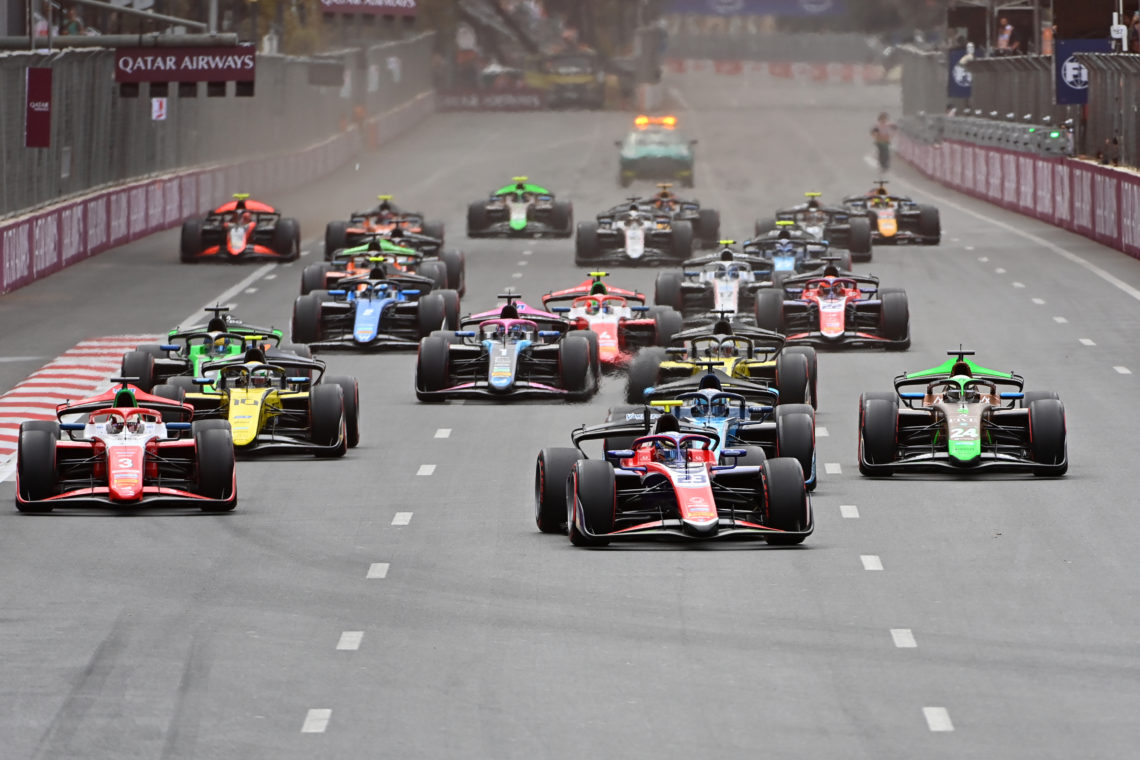


Formula 2 acts as the final step for young drivers in motorsport before the pinnacle of racing in Formula 1.
The series houses well-established teams that have experience with developing talented drivers, as well as machinery that is aimed to be as similar to F1 as possible to provide a challenge for its competitors.
Formula 2 brought in a new design for their 2024 cars, with a revolutionary rear wing that creates more drag that allows for easier overtaking.
Formula 3 will also make the change come 2025 and will run the design until at least 2027. The new machine complies with the current F1 spec as it moves to being a more sustainable sport.
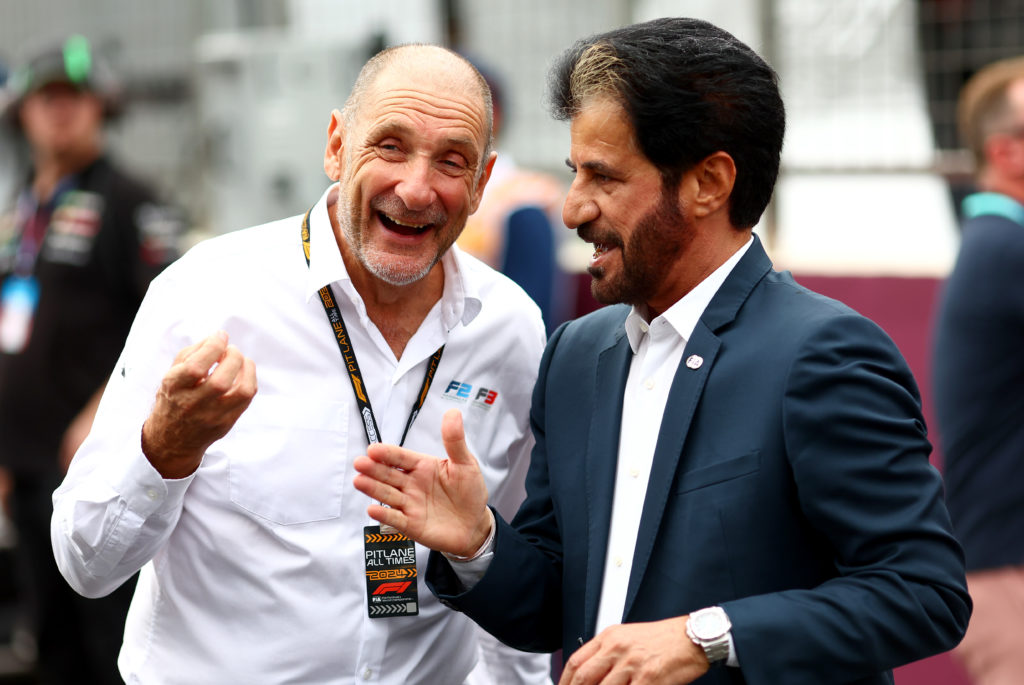
Formula 2 CEO Bruno Michel says ensuring drivers are not ‘totally lost’ when they join F1 is the ‘most important thing’
The 2024 F2 season has brought about serious competition at the front of the grid.
READ MORE: Isack Hadjar closing in on equalling impressive Charles Leclerc record in F2 this season
Gabriel Bortoleto and Isack Hadjar have been going head-to-head in the championship all year, with the Brazilian currently leading the standings by four and a half points with two rounds remaining.
This season has seen 16 different winners – a record for the championship – and all of the 11 teams on the grid has scored a podium finish.
Speaking with Motorsport, F2 CEO Bruno Michel highlighted what is in place in the series, as well as F3, that prepare its drivers for the next step up.
He said: “We are trying to make sure that the evolution of the F3 and F2 cars towards F1 is the correct one and that the drivers are getting the experience not only in the car, it is also everything around F1 on the race weekend.
“It is also about the format of the weekend, about the fact they are working in a different environment, that they have less track time. There are a lot of things that we do that are preparing drivers for F1, at the end of the day.
“Of course, the tyres are also playing an important part with the progression of the drivers as well. So it is not only the aerodynamics of the car, it is also all the systems that the car has.
“The drivers start to work with the DRS, with the environments the FIA is creating with race control, the marshalling system – there are all these things the drivers need to be prepared for, [so that] when they arrive in F1, they are not going to be totally lost.
“That is the most important thing we do when we prepare drivers from F3 to F2 and F2 to F1.”
Bruno Michel believes the Formula 2 pyramid is working after Oliver Bearman and Franco Colapinto’s performances
The preparation of F2 drivers for F1 has seemed to be effective as Oliver Bearman and Franco Colapinto have shown with their performances this season.
Bearman was called up to replace Kevin Magnussen at Haas in Baku and the Brit was able to match the pace of teammate Nico Hulkenberg and finish in 10th, becoming the first driver to score points for two different teams in his first two appearances, having finished seventh in Jeddah with Ferrari after he stood in for Carlos Sainz.
Colapinto made his second appearance for Williams in Azerbaijan as he was drafted in to replace Logan Sargeant for the remainder of the season. The Argentine showed brilliant pace all weekend as he finished an impressive eighth.
With these displays, Michel says the ‘pyramid is working’ as F2 talent are finally getting their chance to prove themselves, and effectively, in F1 after there were none on the grid come the start of the year.