

| First held: | 1911 |
| Times held: | 108 |
| Circuit: | Indianapolis Motor Speedway |
| Circuit length: | 4 km (2.5 miles) |
| Distance: | 500 miles / 200 laps |
| Most wins (driver): | 4x A J Foyt (1961, 1964, 1967, 1977) |
| 4x Al Unser (1970, 1971, 1978, 1987) | |
| 4x Rick Mears (1979, 1984, 1988, 1991) | |
| 4x Helio Castroneves (2001, 2002, 2009, 2021) | |
| Most wins (team): | 20x Team Penske |
| Most wins (chassis): | 24x Dallara |
| Most wins (engine): | 27x Offenhauser |
The Indianapolis 500 – often shortened to the Indy 500 – is the centrepiece race of the IndyCar Series. It was first held in 1911 and it is one part of motorsport’s Triple Crown.
Each year, the Indy 500 dominates the headlines over the month of May as IndyCar heads to the square-oval track at the Indianapolis Motor Speedway. The race is also traditionally held over Memorial Day weekend in late May and is the crown jewel race for the series’ calendar.
The Indy 500 further bills itself as the Greatest Spectacle in Racing and was originally staged to respond to the novelty of the Indianapolis Motor Speedway reducing. Carl Fisher was the circuit’s president and organised its creation as a testing facility for the automotive industry.
Another testbed in motorsport for the automotive industry, the 24 Hours of Le Mans, is also a part of the Triple Crown alongside the Indy 500. Formula 1 lays claim to the other facet via the Monaco Grand Prix, with Graham Hill the only driver to ever win the Triple Crown so far.
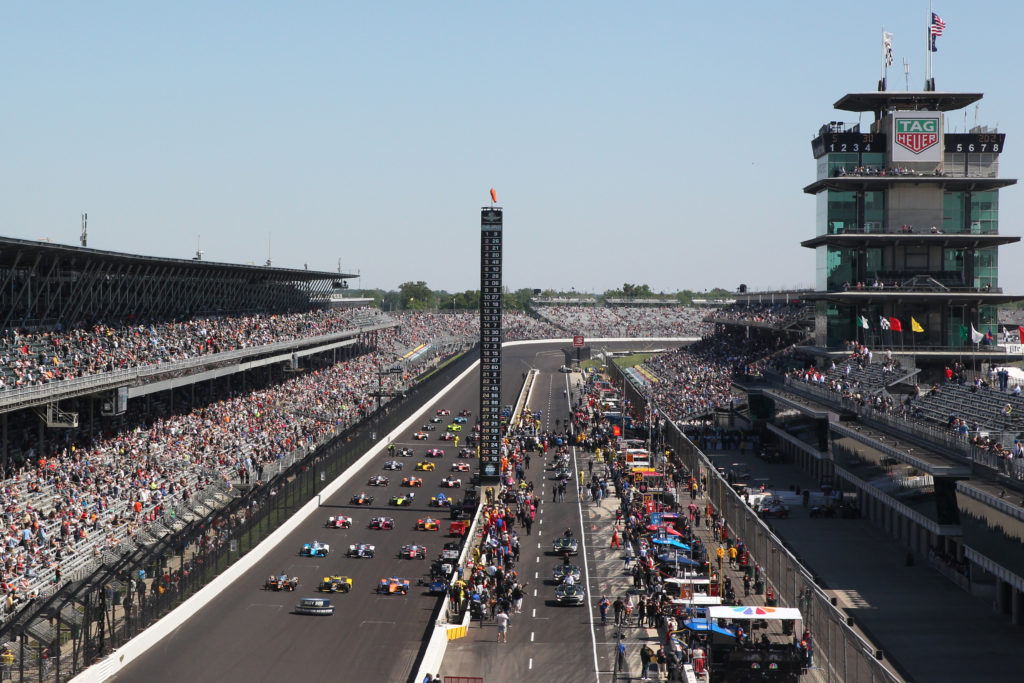
History of the Indianapolis 500
Fisher responded to the Indianapolis Motor Speedway fading in popularity by organising the debut Indy 500 in the hopes that its unprecedented length and $27,550 (£20.5k) prize purse would draw the crowds back. And it did just that with 80,000 people attending the first race.
Teams from around the United States of America and even Europe headed to Indianapolis to try to win the first Indy 500, which Ray Harroun won in a Marmon. Harroun was even ahead of the field in one other way as the first person in Indy history to run with a rear-view mirror.
Rather than having a passenger sit onboard looking back at any chasing cars like his rivals, Harroun realised the huge benefits of having a single-seater. So, he installed a mirror using a bracket on the dashboard to save weight – but the bumps made its realistic usage negligible.
Winning the first Indy 500 secured Harroun $14,250 (£10.7k) in prize money, with which the American instantly retired from driving. It took Harroun six hours and 42 minutes to win the first running of Indy 500 by 103 seconds and he penned an average race speed of 74.6 mph.
The shortest Indy 500 on record came in 1976 when Johnny Rutherford won having finished only 102 laps and 255 of the 500-mile distance. Heavy rain forced the organisers to stop the race early on Lap 103 and declare a result, with it too dangerous to run the Indy 500 in rain.
Organisers of the Indy 500 can declare a final race result as long as a minimum of 101 of the 200 laps of the Indianapolis Motor Speedway’s square-oval circuit have been achieved. So, a 90-minute Indy 500 can be declared final, whereas the race often runs to three hours in full.
The Indy 500 was also a part of the Formula 1 world championship between 1950 and 1960. It ensured any drivers who competed in the Indy 500 across those 11 runnings also enjoy at least one Formula 1 race in their tally, even if they did not compete in the F1 championship.
Why does the Indy 500 not run in the rain?
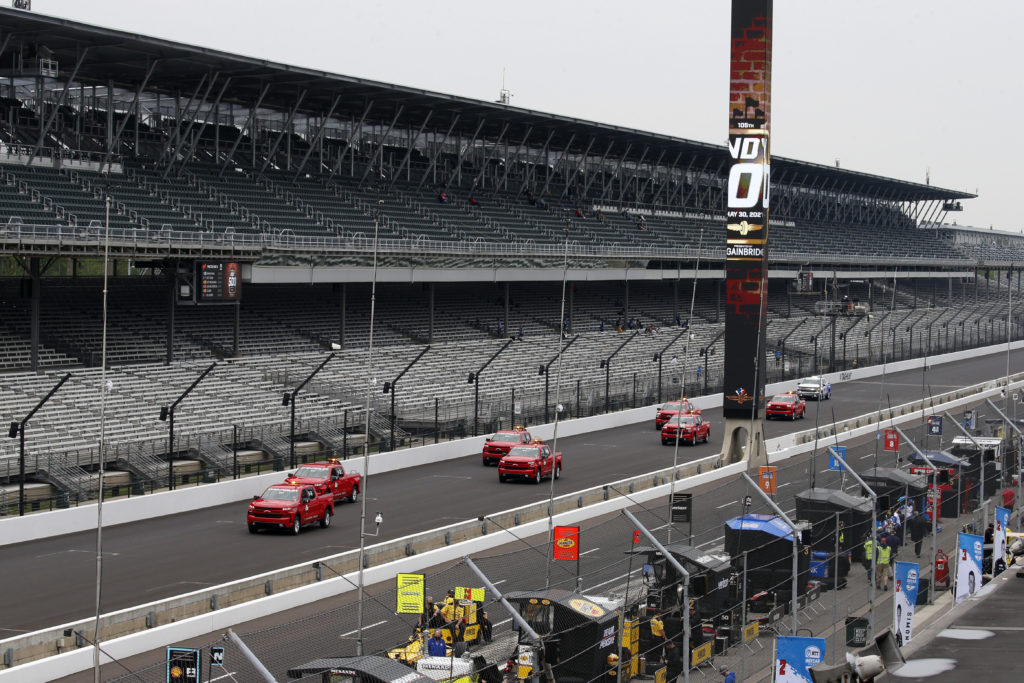
Given the speeds the drivers achieve during the Indy 500, and over the associated practice plus qualifying sessions, it is simply too dangerous for them to run on the square-oval circuit at the Indianapolis Motor Speedway in wet conditions so any rain forces the action to pause.
While IndyCar does have wet, grooved tyres available for races on road and street courses, it does not make those tyres available on ovals – especially at the Indy 500. It would slow a car down too much and leave spray for drivers behind to do the Indy 500 on intermediate tyres.
Nowadays, organisers of the Indy 500 have a huge team dotted around the circuit to dry the Indianapolis Motor Speedway with powerful dryers fitted onto trucks. It can take more than 90 minutes to fully dry the track, depending on the intensity of the rain and the cloud cover.
How does qualifying for the Indy 500 work? What is the race format?
The Indy 500 dominates the month of May as the event extends far beyond just the 200 laps of the Indianapolis Motor Speedway’s 2.5-mile square-oval circuit on race day. Instead, it all begins two weeks earlier with the first of nine practice sessions to start fine-tuning set-ups.
For some drivers, their Indy 500 experience could also start months before the race with the Rookie Orientation Program (ROP) test. It is a mandatory requirement that all first-time Indy 500 entrants pass the ROP test at the Indianapolis Motor Speedway to be permitted to race.
The Indy 500 then officially starts with six practice sessions in the lead into the first stage of qualifying, with one extra practice session before the second stage of qualifying, one on the Monday before the race and the last one, known as Carb Day, on the Friday before the race.
Qualifying for the Indy 500 is held across four sessions, with the field of drivers decreasing in numbers each time. The first qualifying stage for the Indy 500 is run on the Saturday a week before the race with the full field of cars setting the grid for starting positions 13 through 30.
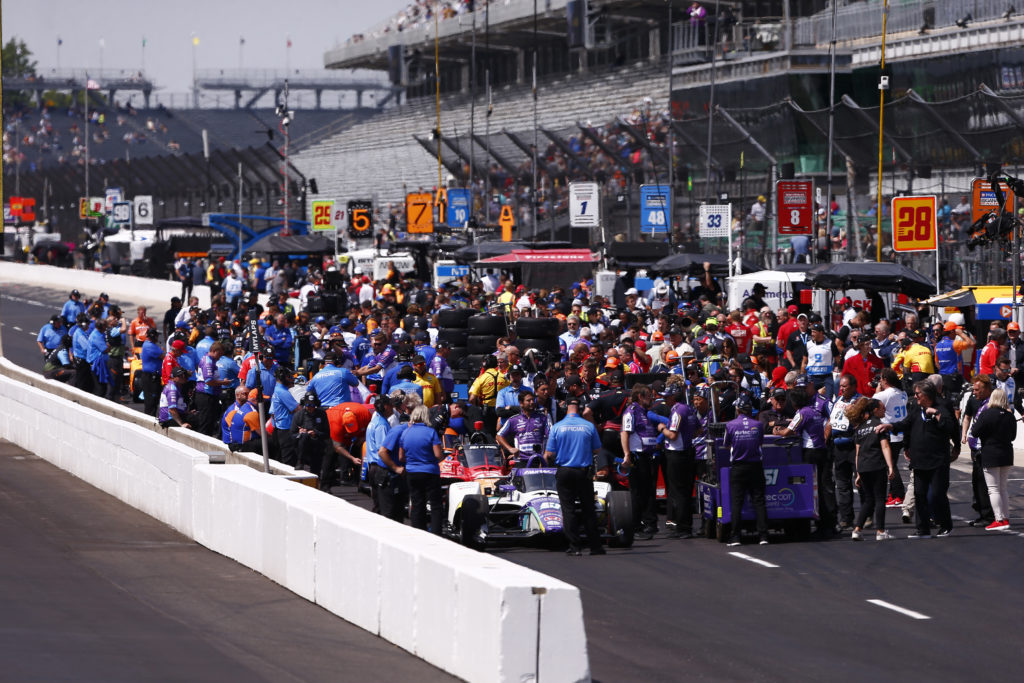
Every driver taking part in Day One of qualifying for the Indy 500 gets at least one chance to attempt a four-lap run of the Indianapolis Motor Speedway, from which their average speed from the four laps is recorded. Drivers can choose to try again once every racer has finished.
Teams and drivers can choose to try to improve their four-lap average speed on Day One of qualifying for an Indy 500 by taking one of two lanes. Lane 1 has priority over Lane 2 to get onto the track but any drivers choosing Lane 1 must withdraw their previous qualified time.
Should the field of entrants for an Indy 500 exceed 30 drivers, the cars outside of the Top 30 are not considered to have a qualifying speed. Any drivers outside of the Top 30 on Day One must go through Last Chance Qualifying to set the last three-car row of the Indy 500 grid.
Last Chance Qualifying is held on Day Two of qualifying for an Indy 500, as well as the Top 12 and Fast Six sessions. The Top 12 session boasts the 12 drivers with the fastest qualifying speeds on Day One and sets places seven through 12 on the grid, with the top six advancing.
The Fast Six and the fight for pole position at an Indy 500 then follows to define the starting positions of the six drivers who achieved the fastest qualifying speeds in the Top 12. Drivers only get one chance to achieve the fastest qualifying speeds and to take pole in the Fast Six.
Once qualifying is concluded on the Sunday before the Indy 500, practice then resumes the following day. Carb Day also follows on the Friday before the race to present the teams and the drivers with one last chance to refine their race set-ups before the Indy 500 goes green.
Pole position provides the fastest driver in qualifying for an Indy 500 with the inside line for Turn 1. The race begins with a rolling start for the grid of 30 (or 33) cars, who are lined up in rows of three, and runs for 500 miles – or until the result is declared after at least 101 laps.
What is the Indy 500 Rookie Orientation Program (ROP) test?
The Rookie Orientation Program (ROP) is a mandatory test that any first-time Indy 500 racer must pass to prove the driver is safe, and competent, enough to race in the 500-mile race. It is a three-part event which tests drivers over varying, increasing speeds around the track.
Drivers must complete a minimum of 10 laps of the Indianapolis Motor Speedway and keep their lap speed set between 205-210 mph, before moving onto 15 laps at 210-215 mph and lastly 15 laps quicker than 215 mph. If a driver fails to average the targets, they cannot race.
What does it take to win the Indianapolis 500?
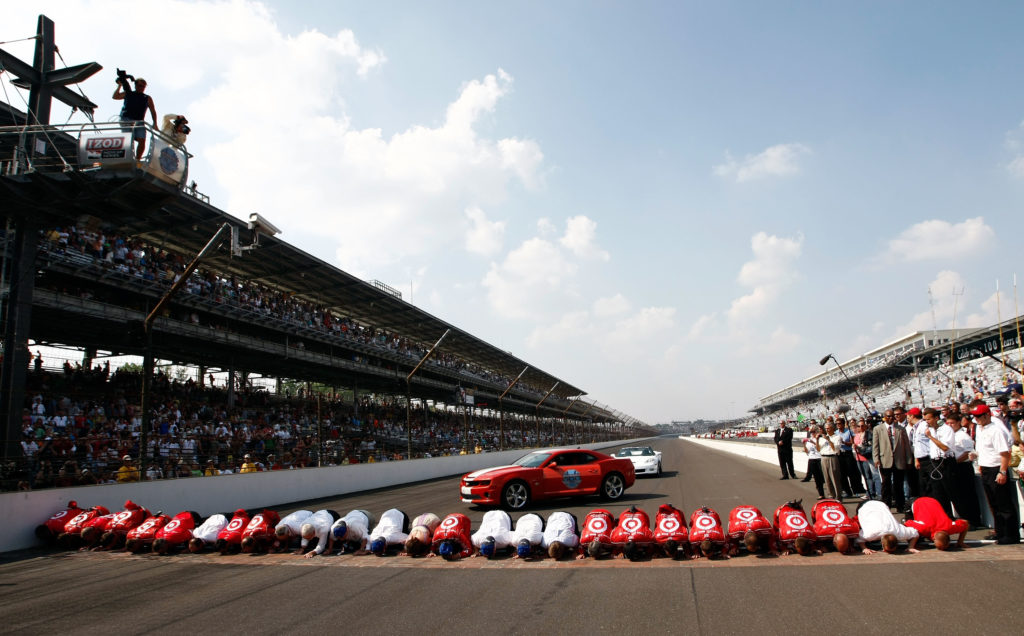
A driver and their team must execute a perfect race to win the Indianapolis 500 with it often compared to a game of chess by past winners of the Indy 500. It is simply not enough to line up on pole position at the Indianapolis Motor Speedway to stay in first place over 200 miles.
Winning the Indy 500 requires a mixture of mental strength to cope with the pressure of the showpiece race in the IndyCar Series, positional awareness to avoid a high-speed crash, the skill to control the car and a great team in the pits calling the strategy and being the spotter.
Every driver in an Indy 500 needs a great spotter constantly communicating over their radio, updating them on where other drivers are nearby on the circuit and whether to run high or go low in the corners to avoid a crash. By the time a driver senses a crash, it can be too late.
Drivers must be in great physical condition to cope with the constant G-forces, which can be as much as 5G during an Indy 500 due to the banked corners, as well. While the square-oval track at the Indianapolis Motor Speedway has just four corners, they hit those Gs 800 times.
The winner of the Indy 500 receives the Borg-Warner Trophy
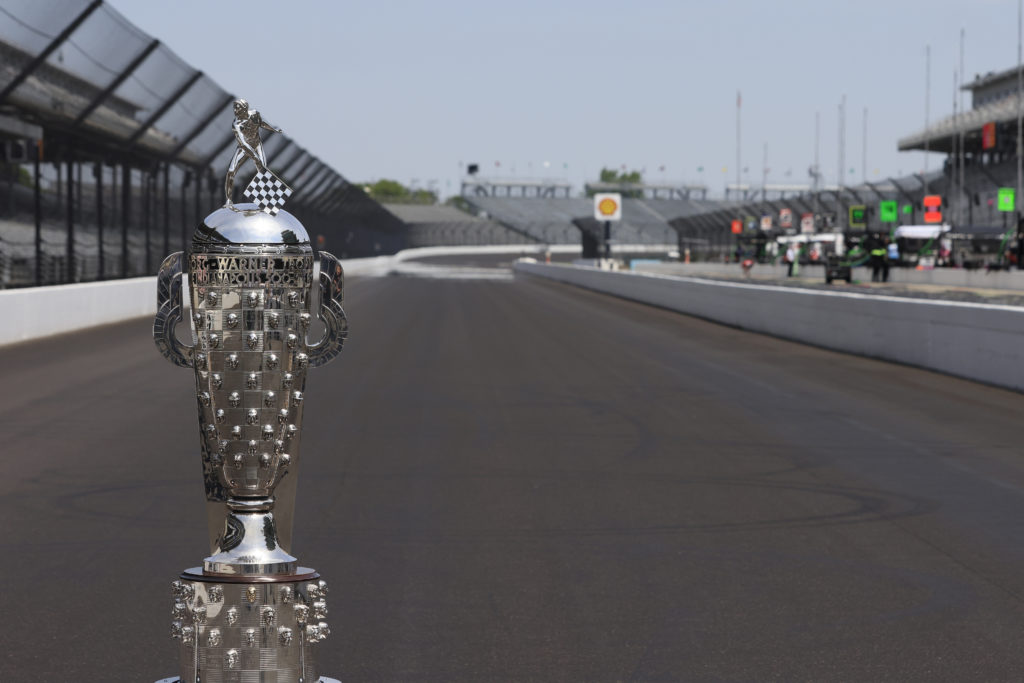
Along with securing their place in IndyCar history books, the winning driver of the Indy 500 receives the Borg-Warner Trophy and a glass of milk. The Borg-Warner Trophy was officially declared as the main prize ahead of the 24th Running of the Indianapolis 500 back in 1936.
The Indy 500 trophy is named after BorgWarner Incorporated, which also commissioned it. But the winning driver does not get to keep the Borg-Warner Trophy, which is permanently kept at the Indianapolis Motor Speedway, and instead gets a miniature ‘Baby Borg’ replica.
The proper Borg-Warner Trophy measures in at a massive 163 cm (5 ft 4) tall and it is made of sterling silver. Additionally, the main body of the trophy features the faces of every Indy 500 winner until 1986, after which an additional base was added to include future winners.
Why does the Indy 500 winner drink milk?
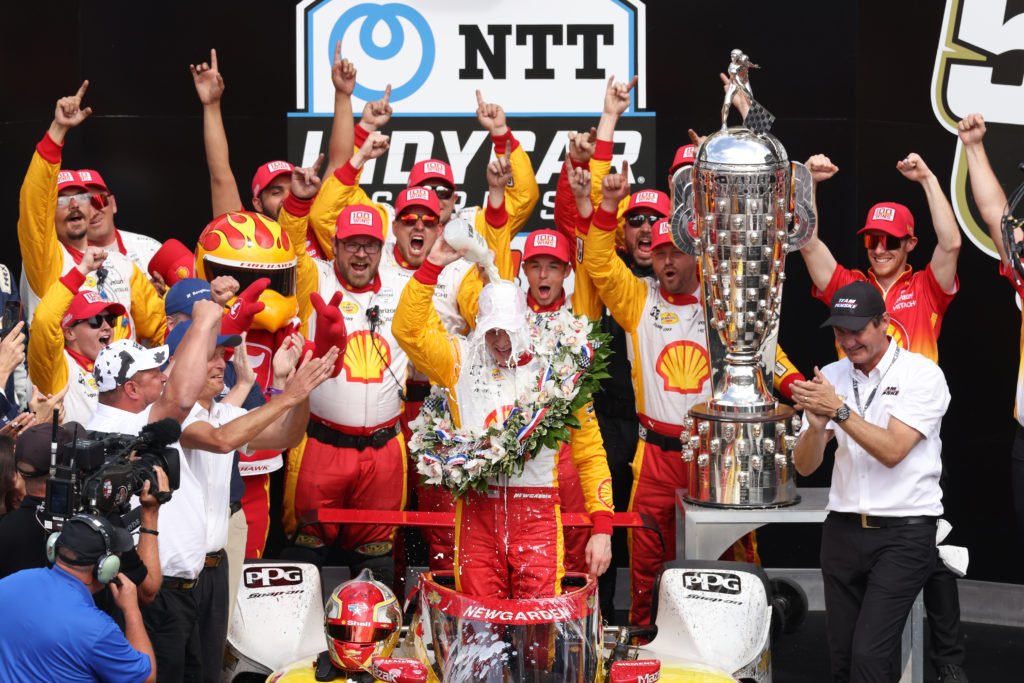
It is one of the main traditions of the Indianapolis 500 that the winning driver drinks milk on the podium – or even pours it over their head – straight after winning the race. The tradition dates back to 1936 and the 24th Running of the Indy 500 when Louis Meyer got a third win.
Meyer became the first three-time Indy 500 winner after making it to Victory Lane on debut in 1928, again in 1933 and lastly in 1936, although he continued to enter until 1939. He also inadvertently started the tradition of drinking milk owing to fatigue after his victory in 1936.
Four-and-a-half hours of driving on a warm day in May exhausted Meyer, so the Manhattan native asked for some buttermilk after growing up believing in its nourishing and refreshing benefits. A marketing person happened to see film of it, so got in touch with the organisers.
The marketing person inquired about having the Indy 500 winner drink milk to celebrate at future races. But it was not until 1954 that the tradition truly came into effect after Wilbur Shaw, as the president of the Indianapolis Motor Speedway, gave the winning driver water.
Indy 500 winners drinking milk to celebrate their victory truly took hold at the 1954 running after The American Dairy Industry tabled a lucrative deal for the winning driver and for their crew if the driver was broadcast on the live TV coverage drinking milk whilst in Victory Lane.
To this day, The American Dairy Industry asks every driver signed up to take part in the Indy 500 which milk they would like should they win IndyCar’s showpiece race. Drivers can take their pick from fat-free, 2%, whole milk or ‘no preference’, with zero dairy-free alternatives.
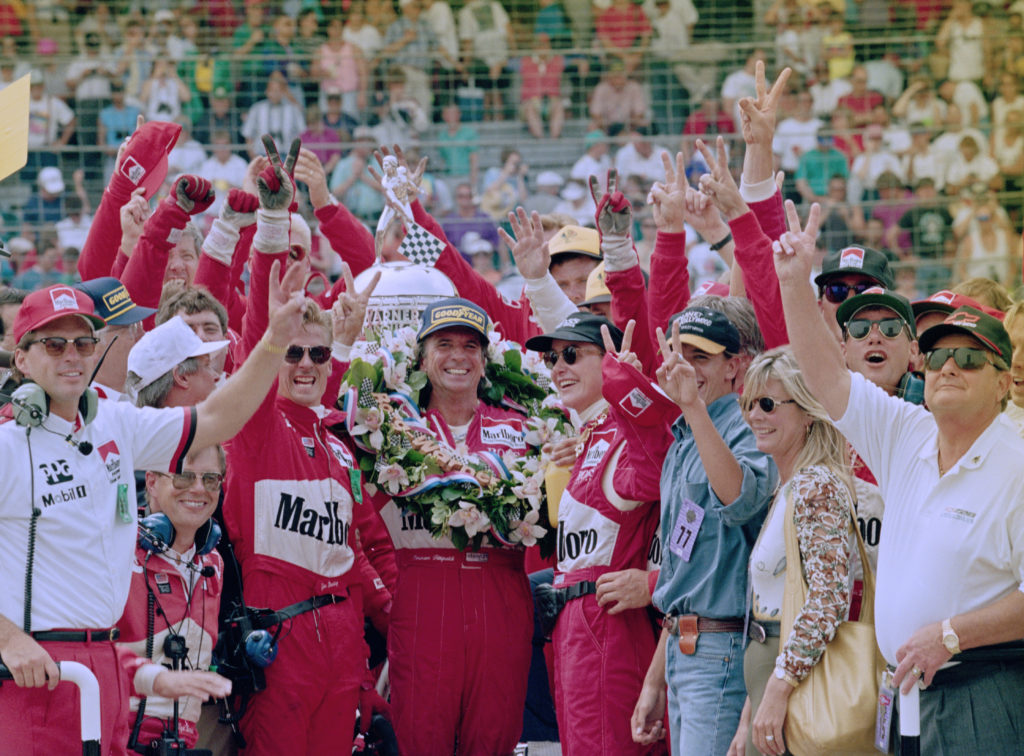
Yet Emerson Fittipaldi notoriously broke from tradition after winning his second Indy 500 in 1993 when the two-time F1 champion declined a bottle of milk for orange juice. He owned orange groves in his native Brazil and wanted to promote the Brazilian citrus drink industry.
Fittipaldi enraged fans at the Indianapolis Motor Speedway by rejecting milk to drink orange juice in Victory Lane after winning the 1993 Indy 500. He eventually agreed to have a sip of milk, allegedly persuaded by team owner Roger Penske, and donated the money to charity.
No driver has yet broken from the tradition and refused to drink milk after winning the Indy 500 since Fittipaldi. IndyCar also no longer offers the drivers taking part in any Indy 500 the choice of buttermilk as it is ‘made and used differently’ than when the tradition first started.
Team Penske are the most successful team at the Indianapolis 500
Since the very first running of the Indianapolis 500 in 1911, no outfit has won the race more often to date than Team Penske. The Captain’s outfit have made 20 trips to Victory Lane so far, more than double that of Andretti who have only claimed six wins at the Indy 500 so far.
Mark Donohue sealed Team Penske their first Indy 500 win in 1972, just four years after the squad had debuted at the race in 1968. The Australian’s only career victory at The Brickyard also saw one of Team Penske’s biggest winning margins yet while driving in a McLaren M16.
List of every Team Penske win at the Indianapolis 500:
| YEAR | DRIVER | CHASSIS | ENGINE | WINNING MARGIN |
| 1972 | Mark Donohue | McLaren | Offenhauser | 190.95 seconds |
| 1979 | Rick Mears | Team Penske | Cosworth | 45.69 seconds |
| 1981 | Bobby Unser | Team Penske | Cosworth | 5.180 seconds |
| 1984 | Rick Mears | March | Cosworth | Two laps |
| 1985 | Danny Sullivan | March | Cosworth | 2.477 seconds |
| 1987 | Al Unser | March | Cosworth | 4.496 seconds |
| 1988 | Rick Mears | Team Penske | Chevrolet | 7.072 seconds |
| 1991 | Rick Mears | Team Penske | Chevrolet | 3.149 seconds |
| 1993 | Emerson Fittipaldi | Team Penske | Chevrolet | 2.862 seconds |
| 1994 | Al Unser Jr | Team Penske | Mercedes-Benz | 8.600 seconds |
| 2001 | Helio Castroneves | Dallara | Oldsmobile | 1.737 seconds |
| 2002 | Helio Castroneves | Dallara | Oldsmobile | 19.4404 seconds |
| 2003 | Gil de Ferran | Panoz | Toyota | 0.299 seconds |
| 2006 | Sam Hornish Jr | Dallara | Honda | 0.0635 seconds |
| 2009 | Helio Castroneves | Dallara | Honda | 1.9819 seconds |
| 2015 | Juan Pablo Montoya | Dallara | Chevrolet | 0.1046 seconds |
| 2018 | Will Power | Dallara | Chevrolet | 3.1589 |
| 2019 | Simon Pagenaud | Dallara | Chevrolet | 0.2086 seconds |
| 2023 | Josef Newgarden | Dallara | Chevrolet | 0.0974 seconds |
| 2024 | Josef Newgarden | Dallara | Chevrolet | 0.3417 seconds |
A J Foyt, Al Unser, Rick Mears and Helio Castroneves have won the Indy 500 a record four times
Four drivers share the record for having the most Indy 500 wins with A J Foyt, Al Unser, Rick Mears and Helio Castroneves each winning four times around the square-oval course at the Indianapolis Motor Speedway. The first three even raced against each other for wins at IMS.
Foyt scored his first Indy 500 victory at the 1961 edition, Unser stood atop the podium with his first win in 1970 and Mears made it to Victory Lane for the first time in 1979. Castroneves started a march toward IndyCar greatness by winning his first Indy 500 at the 2001 edition.
List of every Indianapolis 500 win by A J Foyt:
| YEAR | TEAM | CHASSIS | ENGINE | WINNING MARGIN |
| 1961 | Bowes Racing | Bignotti Trevis | Offenhauser | 8.28 seconds |
| 1964 | Sheraton-Thompson | Ansted Watson | Offenhauser | 84.35 seconds |
| 1967 | Sheraton-Thompson | Ansted Coyote | Ford | Two laps |
| 1977 | Gilmore Racing | Coyote | A J Foyt | 28.63 seconds |
List of every Indianapolis 500 win by Al Unser:
| YEAR | TEAM | CHASSIS | ENGINE | WINNING MARGIN |
| 1970 | Johnny Lightning | Colt | Ford | 32.19 seconds |
| 1971 | Johnny Lightning | Colt | Ford | 22.91 seconds |
| 1978 | First National City | Lola | Cosworth | 8.09 seconds |
| 1987 | Cummins-Holset / Team Penske | March | Cosworth | 4.496 seconds |
List of every Indianapolis 500 win by Rick Mears:
| YEAR | TEAM | CHASSIS | ENGINE | WINNING MARGIN |
| 1979 | The Gould Charge / Team Penske | Team Penske | Cosworth | 45.69 seconds |
| 1984 | Pennzoil Z-7 / Team Penske | March | Cosworth | Two laps |
| 1988 | Pennzoil Z-7 / Team Penske | Team Penske | Chevrolet | 7.072 seconds |
| 1991 | Penske Chevy 91 | Team Penske | Chevrolet | 3.149 seconds |
List of every Indianapolis 500 win by Helio Castroneves:
| YEAR | TEAM | CHASSIS | ENGINE | WINNING MARGIN |
| 2001 | Team Penske | Dallara | Oldsmobile | 1.737 seconds |
| 2002 | Team Penske | Dallara | Chevrolet | 19.4404 seconds |
| 2009 | Team Penske | Dallara | Honda | 1.9819 seconds |
| 2021 | Meyer Shank Racing | Dallara | Honda | 0.4928 seconds |
What is the Indianapolis Motor Speedway square-oval course like?
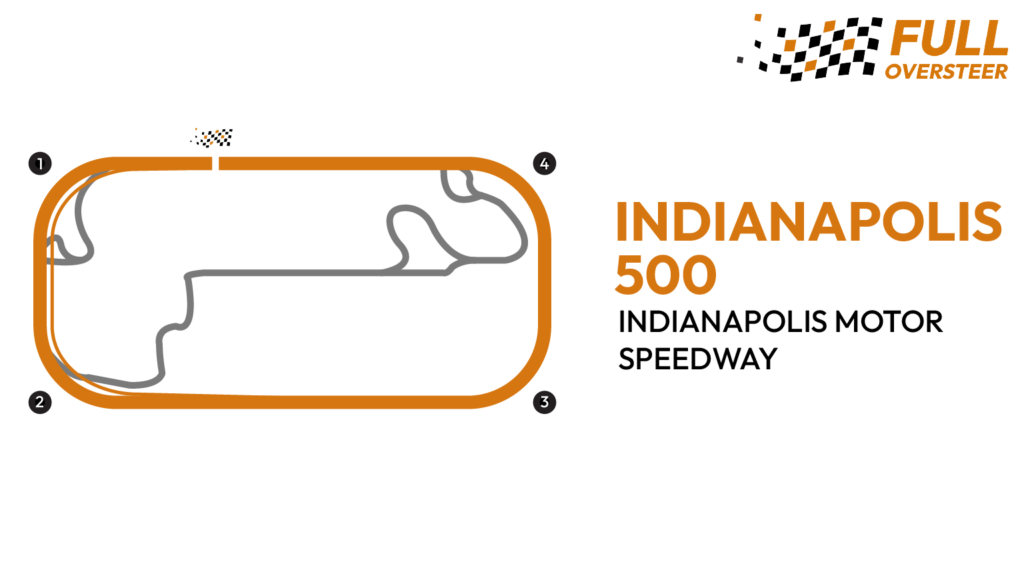
IndyCar stages its annual showpiece race, the Indy 500, on the 2.5-mile square-oval circuit at the Indianapolis Motor Speedway. It is not the longest oval circuit in the world or even in North America, where the Talladega Superspeedway in Alabama measures 2.66 miles long.
But the Indianapolis Motor Speedway is the heart of automotive racing in the USA, with its design rarely altered since opening in 1909. It is from its earliest years that the Indianapolis Motor Speedway got its nickname The Brickyard, having been made from 3.2 million bricks.
The Indianapolis Motor Speedway was also the first circuit to earn the Speedway name and can hold 400,000 spectators at its capacity, boasting 257,000 permanent grandstand seats. The Indianapolis Motor Speedway even held the F1 United States Grand Prix from 2000-07.
Formula 1 visited the Indianapolis Motor Speedway using its in-field road course, which also has four holes of an 18-hole golf course within it. But the Indy 500 is only ever staged on the venue’s main square-oval track, which also runs in the opposite direction to the road course.
All four corners of the 2.5-mile square-oval circuit at the Indianapolis Motor Speedway have nine degrees of banking. Turns 1-2 and T3-4 are respectively tied by 660-foot short chutes, while the front and back straights from Turn 4 into T1 and Turn 2 into T3 are 3,300-foot long.
How to buy tickets for the Indy 500
The Indianapolis Motor Speedway has multiple options for fans looking to buy tickets for the Indy 500. Returning fans from the previous running of the Indy 500 also have priority access to purchase tickets for the following year’s edition before fresh visitors can apply for tickets.
IMS processes new ticket applications for the Indy 500 once all renewal or upgrade requests have been completed, with successful applicants normally contacted towards the end of the calendar year. IMS processes ticket requests with the application seen as intent to purchase.
New applications for tickets for the Indy 500 does not guarantee entry to the flagship race in the IndyCar Series, with fans offered the chance to apply for the tickets they would then like to purchase if successful. Seats are assigned on the choices made while applying for tickets.
If a ticket application is unsuccessful owing to the selected grandstands being sold out, IMS will contact the affected fans to offer alternative grandstands for the Indy 500. Only once all returning and new ticket applications are resolved will IMS put any remaining tickets on sale.