

| First held: | 1923 |
| Times held: | 92 |
| Circuit: | Circuit de la Sarthe |
| Circuit length: | 13.626 km (8.467 miles) |
| Distance: | 24 hours |
| Most wins (driver): | 9x Tom Kristensen |
| Most wins (manufacturer): | 19x Porsche |
| Most wins (team): | 15x Joest Racing |
The 24 Hours of Le Mans is the showpiece race of the World Endurance Championship and a part of motorsport’s Triple Crown. It was first run in 1923 and uses public roads.
Formula 1 and IndyCar boast the other two legs of the Triple Crown with the Monaco Grand Prix and the Indy 500. But no race anywhere on the planet puts drivers and machines to the test like the 24 Hours of Le Mans. It is the ultimate event in motorsport and is loved by fans.
More than 250,000 motorsport fanatics flood Le Mans each year to see endurance racing at its finest. The race follows one simple rule: whichever car covers the furthest distance in 24 hours is the winner, and the winning drivers forever enjoy their names in the history books.
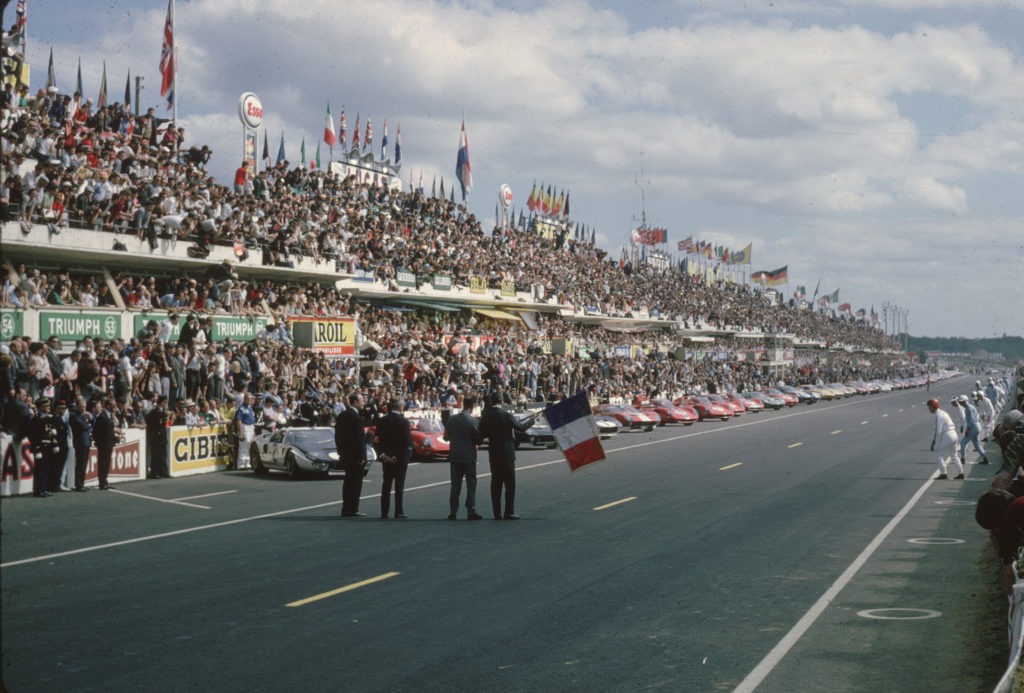
History of the 24 Hours of Le Mans
The Automobile Club de l’Ouest (ACO) has organised the 24 Hours of Le Mans since its very beginning in 1923 – when originally named the 24-hour Grand Prix d’Endurance. It has also always featured public roads to the south of the city of Le Mans nearly 115 miles from Paris.
It was not the first race that Le Mans staged on its roads as the ACO initially took the French Grand Prix there. Georges Durand, the at-the-time general secretary of the ACO, wanted the race to run on the Mulsanne as aviation pioneers the Wright brothers tested the Flyer there.
Durand and Charles Faroux would later lead the birth of the 24 Hours of Le Mans in 1923 as France was still yet to repair most of the roads destroyed over the First World War. The ACO has always fixated on the everyday motorist and encouraging car manufacturers to innovate.
Why is the 24 Hours of Le Mans run on public roads?
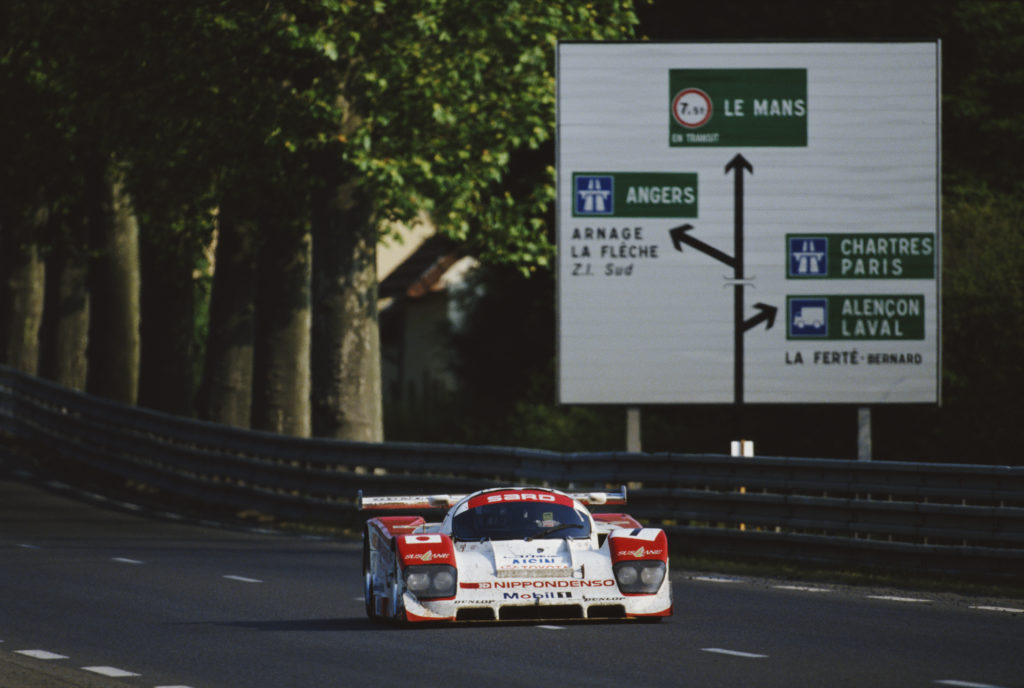
The 24 Hours of Le Mans therefore arrived as the ultimate proving ground, largely using the same roads as today. At first, the race used a 17-kilometre (10.5 miles) track connecting Les Hunaudieres to the Mulsanne and Arnage – the Circuit de la Sarthe is 13.6 km (8.5 m) now.
Despite permanent circuits soon becoming the norm around the birth of the 24 Hours of Le Mans – Monza opened its doors in 1922 and the Nurburgring opened in 1927 – the ACO has stayed at the Circuit de la Sarthe to keep to its aim of the everyday motorist and innovation.
The ACO and Durand even utilised the 24 Hours of Le Mans in 1926 to challenge the French government’s failures to repair the country’s roads after WWI. Three different road surfaces were used for the race that year to test which would withstand unrelenting traffic the best.
What the ACO and Durand achieved with the 24 Hours of Le Mans further emphasised the Mulsanne’s status as a location of innovation. The race has also always continued to be run on public roads, except the section going from the Porsche Curves through to Tertre Rouge.
The Circuit de la Sarthe stays to public roads which the everyday motorist can drive around outside of race week from Tertre Rouge to the Porsche Curves, including the full Mulsanne straight plus Indianapolis and Arnage corners. It then moves to the semi-permanent circuit.
A lap of the Circuit de la Sarthe finishes by connecting onto the Bugatti Circuit which stages the MotoGP French Grand Prix. But after taking the Dunlop Chicane, the two circuits part at the Esses with the Circuit de la Sarthe continuing onto the fast right-hander of Tertre Rouge.
The ACO doesn’t hide from controversial changes to improve safety at Le Mans
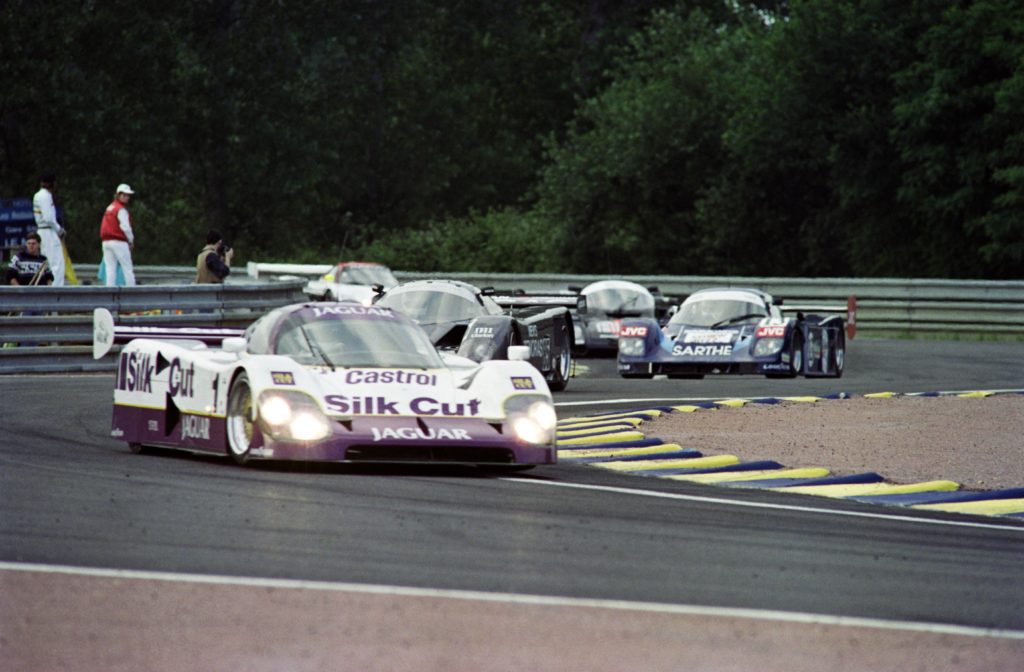
Safety concerns down the years have forced the ACO to make further changes to the layout of the Circuit de la Sarthe to ensure the safety of drivers and spectators across the 24 Hours of Le Mans. One such controversial change saw the ACO add two chicanes to the Mulsanne.
Adding two chicanes on the 6-kilometre-long (3.7 mile) Mulsanne straight in 1990 proved to be the most controversial change the ACO has yet made to the Circuit de la Sarthe. The ACO showed its commitment to safety by removing one of the 24 Hours of Le Mans major draws.
Ever since the race debuted in 1923, taking the kink at the end of the Mulsanne straight was the ultimate test of a driver’s courage and if their car could handle it flat out. But the ACO’s top priority was safety as top-speed-focused prototypes morphed into high-downforce cars.
Another benefit of the 6-kilometre-long (3.7-mile) Mulsanne for a driver was that it was the only real chance to relax during a lap and to check that everything was working as it should with their car. But change was needed, and the two chicanes added major overtaking areas.
Further safety-focused changes the ACO has made to the Circuit de la Sarthe over the years have also proven controversial, including moving the walls that line the Porsche Curves back in 2018 while adding extra tarmac run-off on the inside of the final right-hander of the track.
The ACO removed the famous ‘Le Mans start’ at the 1970 edition
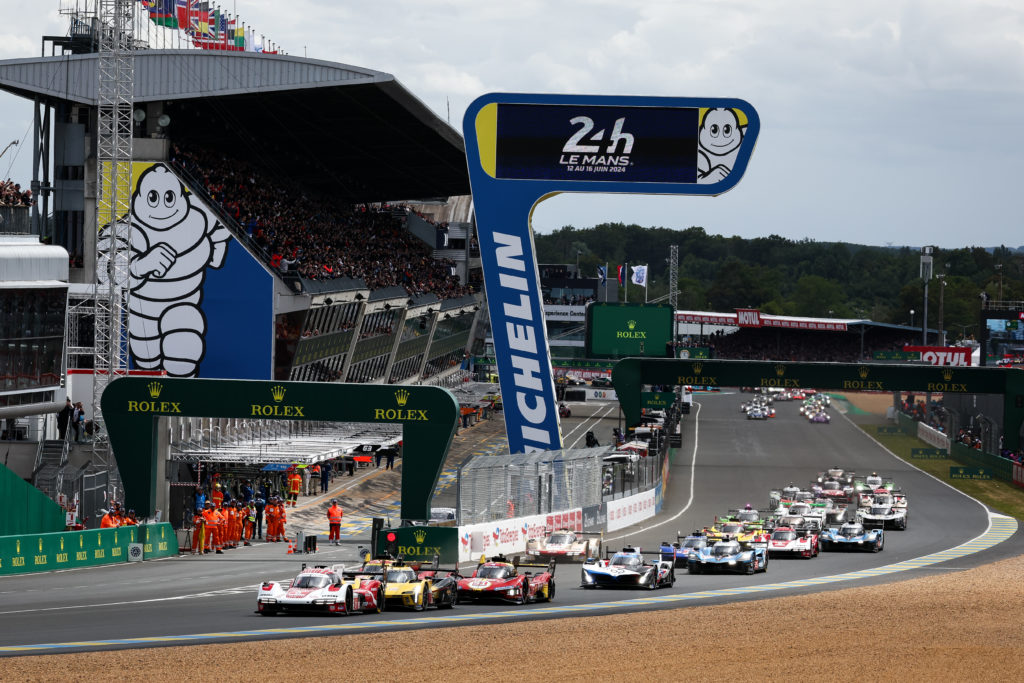
Another major modification that the ACO has made to the 24 Hours of Le Mans includes the removal of the iconic ‘Le Mans start’ at the 1970 edition. Prior to that, the drivers that each team selected to start the race would famously run to their cars, belt up and set off the line.
The image of drivers sprinting across the grid and getting into their cars was a defining trait of the 24 Hours of Le Mans between 1925 and 1969. The first two editions of the race along with the 1970 running used a standing start, while a rolling start has been used since 1971.
Safety concerns saw the ACO change how it started the 24 Hours of Le Mans after concerns were raised following the 1968 edition when Willy Mairesse crashed on the first lap, widely believed to have been caused by the door on the Belgian’s Ford GT40 not being closed fully.
Fellow Belgian Jacky Ickx then took matters into his own hands at the 1969 edition when he walked across the grid, calmly got into his Ford GT40 and buckled his seatbelts before finally setting off. Pole-sitter Rolf Stommelen was nearly at Tertre Rouge in his Porsche 917 by then.
Ickx went on to win the 24 Hours of Le Mans in 1969 with a final lap pass on Hans Herrmann in a Porsche 908. The ACO then adapted how it started the race in 1970 before adopting the current start, with the field leaving seven-and-a-half-minutes before the race starts, in 1971.
Why is the first chicane on the Mulsanne straight called the Daytona Chicane?
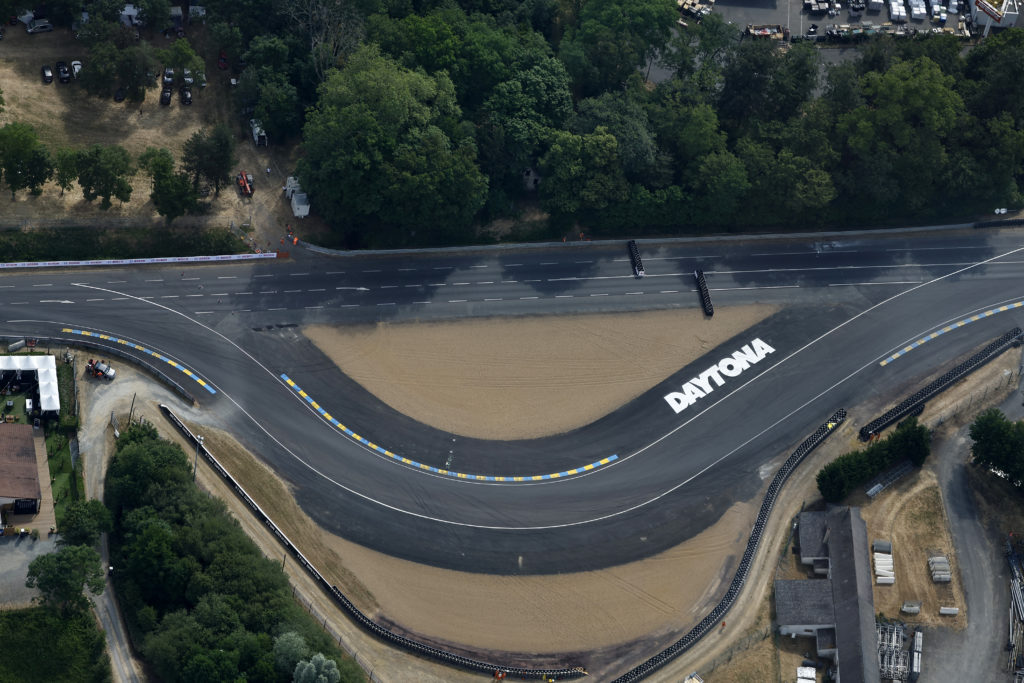
Ties between the 24 Hours of Le Mans and IMSA grew in 2022 when the first chicane on the Mulsanne straight was renamed the Daytona Chicane. It was also painted blue and yellow to mimic the Daytona International Speedway, which renamed its Bus Stop chicane as Le Mans.
The Circuit de la Sarthe did not name Indianapolis corner after IMS
When the first 24 Hours of Le Mans was held in 1923, Arnage corner was a three-part Esses sequence run on a completely flat section of road. But cars repeatedly hitting the apex saw a banking effect start to appear by 1928, so the first right-left part of the corner was renamed.
Yet what was then called Indianapolis corner was not actually named after the Indianapolis Motor Speedway but because the banking was similar to that at IMS. Additionally, a layer of bricks were found when the corner was asphalted just like the 3.2 million used to build IMS.
What does it take to win the 24 Hours of Le Mans?
The 24 Hours of Le Mans is the greatest race in all of motorsport as it needs a special mix of driver skill, mechanical reliability, engineering talent and also luck to win at the Circuit de la Sarthe. As the joke goes due to its unpredictability, the 24 Hours of Le Mans picks its winner.
Drama is guaranteed from the moment the race gets going until the chequered flag falls 24 hours later. Even executing a faultless race does not guarantee a team success at Le Mans, as Toyota found out in harsh fashion in 2016 when they retired on the last lap from the lead.
Toyota looked set to comfortably secure the Japanese brand’s first win at the 24 Hours of Le Mans with the No5 car of Sebastien Buemi, Anthony Davidson and Kazuki Nakajima. But the team’s dreams faded with three minutes to go when Nakajima ground to a saddening halt.
A simple connector line between the turbocharger and intercooler failing saw Nakajima pull up right in front of Toyota’s pit box after a shock loss of turbocharger control resulted in him losing power. Porsche won the 2016 running with Marc Lieb, Neel Jani and Romain Dumas.
Porsche are the most successful manufacturer at the 24 Hours of Le Mans
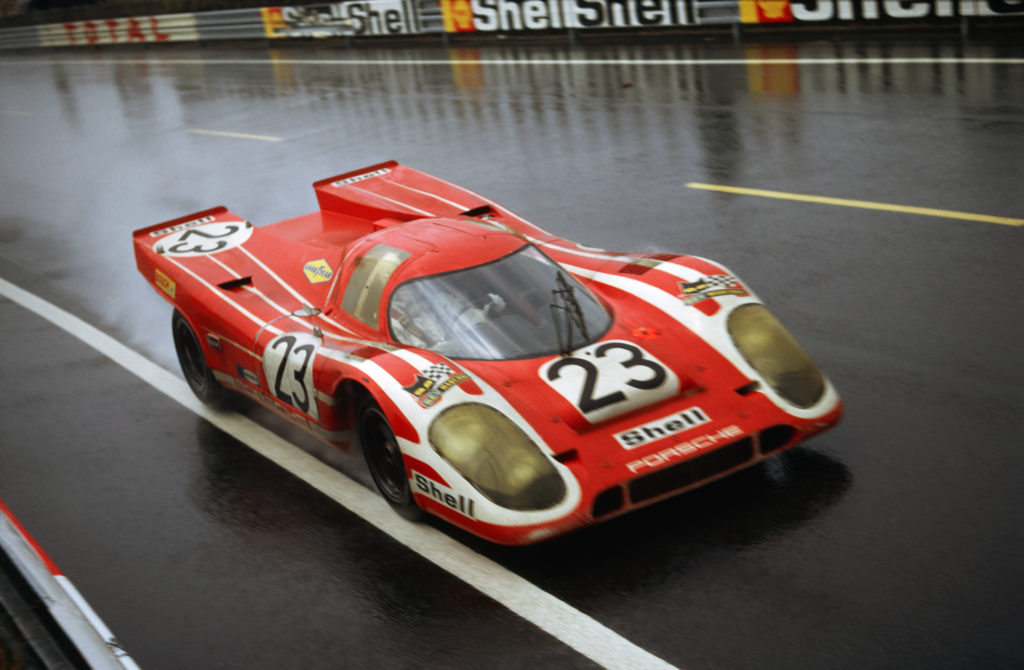
Since the very first running of the 24 Hours of Le Mans in 1923, Porsche have been the most successful manufacturer to date with 19 overall wins at the Circuit de la Sarthe. The German automotive giants achieved the brand’s first outright victory at Le Mans in the 1970 running.
Hans Herrmann and Richard Attwood won Porsche the 24 Hours of Le Mans in 1970 sharing the No23 Porsche 917K in the top S.50 class. The drivers also led an all-Porsche podium as Gerard Larrousse and Willi Kauhsen took second in a Porsche 917L in the S.50 class, ahead of Helmut Marko and Rudi Lins in third position sharing a Porsche 908/2LH in the P3.0 class.
List of every Porsche outright win at the 24 Hours of Le Mans:
| YEAR | CLASS | DRIVERS | CHASSIS | WINNING MARGIN |
| 1970 | S5.0 | Hans Herrmann and Richard Attwood | Porsche 917KH Coupe | Five laps |
| 1971 | S5.0 | Gijs van Lennep and Helmut Marko | Porsche 917KH Coupe | Two laps |
| 1976 | GP6 3.0 | Jacky Ickx and Gijs van Lennep | Porsche 936/76 Spyder | 11 laps |
| 1977 | GP6 3.0 | Jurgen Barth, Hurley Haywood and Jacky Ickx | Porsche 936/77 Spyder | 11 laps |
| 1979 | GP5 SP | Klaus Ludwig, Don Whittington and Bill Whittington | Porsche 935 K3 | Eight laps |
| 1981 | S +2.0 | Jacky Ickx and Derek Bell | Porsche 936/81 | 14 laps |
| 1982 | C | Jacky Ickx and Derek Bell | Porsche 956 | Three laps |
| 1983 | C | Vern Schuppan, Hurley Haywood and Al Holbert | Porsche 956 | 17 seconds |
| 1984 | C1 | Henri Pescarolo and Klaus Ludwig | Porsche 956B | Two laps |
| 1985 | C1 | Klaus Ludwig, Paolo Barilla and ‘John Winter’ (aka Louis Krages) | Porsche 956B | Three laps |
| 1986 | C1 | Derek Bell, Hans-Joachim Stuck and Al Holbert | Porsche 962 | Eight laps |
| 1987 | C1 | Derek Bell, Hans-Joachim Stuck and Al Holbert | Porsche 962C | 20 laps |
| 1994 | LMGT1 | Yannick Dalmas, Hurley Haywood and Maura Baldi | Dauer 962 Porsche | One lap |
| 1996 | LMP1 | Davy Jones, Alex Wurz and Manuel Reuter | TWR Porsche WSC-95 | One lap |
| 1997 | LMP | Michele Alboreto, Stefan Johansson and Tom Kristensen | TWR Porsche WSC-95 | One lap |
| 1998 | LMGT1 | Laurent Aiello, Allan McNish and Stephane Ortelli | Porsche GT1-98 | One lap |
| 2015 | LMP1 | Earl Bamber, Nick Tandy and Nico Hulkenberg | Porsche 919 Hybrid | One lap |
| 2016 | LMP1 | Marc Lieb, Romain Dumas and Neel Jani | Porsche 919 Hybrid | Three laps |
| 2017 | LMP1 | Timo Bernhard, Brendon Hartley and Earl Bamber | Porsche 919 Hybrid | One lap |
Tom Kristensen won the 24 Hours of Le Mans a record nine times
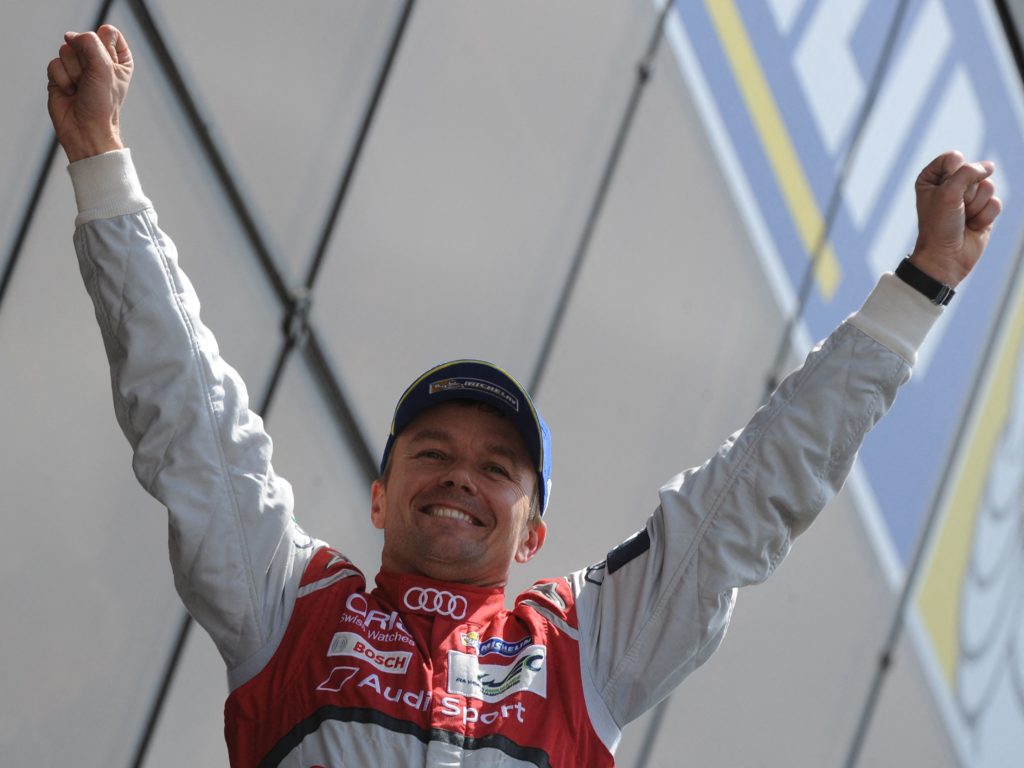
No driver has won the 24 Hours of Le Mans more often than Tom Kristensen, who received the nickname Mr Le Mans after standing on the top step of the podium a record nine times. The Dane first tasted overall glory at Le Mans on debut in 1997 and kept winning until 2013.
Kristensen also won the 24 Hours of Le Mans in a Porsche, an Audi and a Bentley and never finished outside of the podium positions when his car took the chequered flag. He was also only a part of a team that did not finish at the Circuit de la Sarthe four times over 18 visits.
His 24 Hours of Le Mans win tally includes Kristensen taking the overall victory with Michele Alboreto and Stefan Johansson on debut. The great Dane also won the 24 Hours of Le Mans sharing his car with Frank Biela (3), Emanuele Pirro (3), Rinaldo Capello (3), Guy Smith, Seiji Ara, Rinaldo Capello, JJ Lehto, Marco Werner, Allan McNish (2) and Loic Duval in his career.
List of every outright 24 Hours of Le Mans win by Tom Kristensen:
| YEAR | CLASS | DRIVERS | TEAM | CHASSIS | WINNING MARGIN |
| 1997 | LMP | Michele Alboreto, Stefan Johansson and Tom Kristensen | Joest Racing GmbH | TWR Porsche WSC-95 | One lap |
| 2000 | LMP900 | Tom Kristensen, Frank Biela and Emanuele Pirro | Audi Sport Team Joest | Audi R8 | One lap |
| 2001 | LMP900 | Tom Kristensen, Frank Biela and Emanuele Pirro | Audi Sport Team Joest | Audi R8 | One lap |
| 2002 | LMP900 | Tom Kristensen, Frank Biela and Emanuele Pirro | Audi Sport Team Joest | Audi R8 | One lap |
| 2003 | LMGTP | Tom Kristensen, Rinaldo Capello and Guy Smith | Team Bentley | Bentley Speed 8 | Two laps |
| 2004 | LMP1 | Tom Kristensen, Rinaldo Capello and Seiji Ara | Audi Sport Japan Team Goh | Audi R8 | 41 seconds |
| 2005 | LMP1 | Tom Kristensen, JJ Lehto and Marco Werner | ADT Champion Racing | Audi R8 | Two laps |
| 2008 | LMP1 | Tom Kristensen, Rinaldo Capello and Allan McNish | Audi Sport North America | Audi R10 TDI | 31 seconds |
| 2013 | LMP1 | Tom Kristensen, Allan McNish and Loic Duval | Audi Sport Team Joest | Audi R18 e-tron quattro | One lap |
What is the Circuit de la Sarthe like?
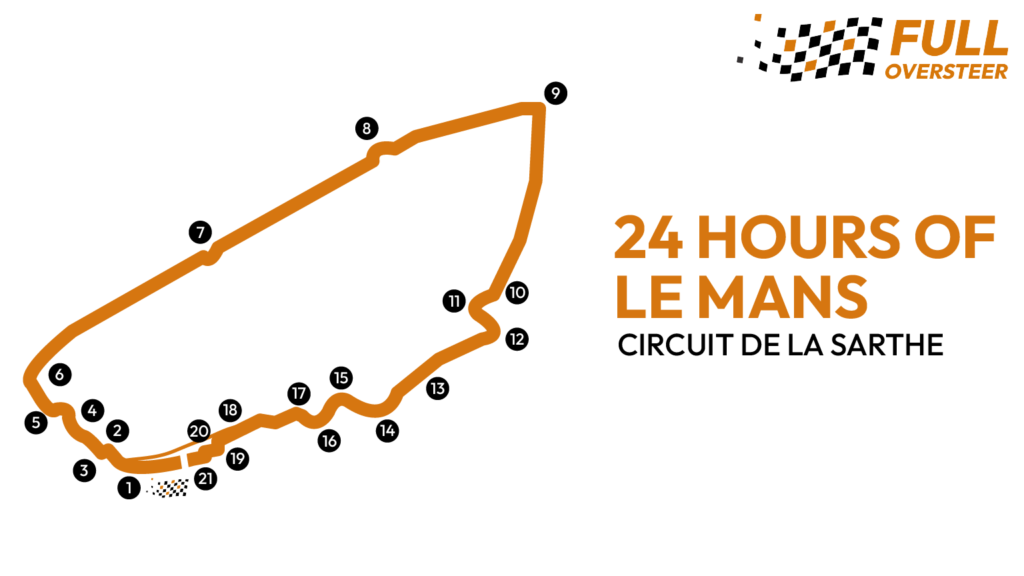
The Circuit de la Sarthe provides the ultimate proving ground for drivers and cars across the 24 Hours of Le Mans each year. It even forces both the teams and their crew of drivers to be humble through whatever weather conditions await during the 24 hours of non-stop action.
Even 85% of a lap of the Circuit de la Sarthe is spent at full throttle with drivers also hitting speeds in excess of 300 km/h (186 mph) multiple times each lap. Drivers must also contend with a mix of classes and driver skill levels as they run during the day and through the night.
Just the slightest of mistake can prove costly at the Circuit de la Sarthe, as well, as the track will punish anyone and everyone either down the Mulsanne or through the difficult Porsche Curves. Drivers must race on the edge of disaster every lap to win the 24 Hours of Le Mans.
How to buy tickets for the 24 Hours of Le Mans
The Automobile Club de l’Ouest offers a number of options for fans wishing to attend the 24 Hours of Le Mans. The ACO also designates a number of localised official ticket sellers for the flagship race of the World Endurance Championship which may also sell travel packages.
Fans buying tickets via the official 24 Hours of Le Mans website or the ACO’s stores located in Le Mans, Tours, Paris and Rouen have the choice of general admission – either for the test day, individual days, the race weekend or the race week in full – or with grandstand seating.
Additionally, the ACO even offers discounted tickets for the 24 Hours of Le Mans for any fans travelling to the Circuit de la Sarthe via eco-friendly means of transport. ACO Members also get priority to buy tickets for the 24 Hours of Le Mans before tickets are put on general sale.