

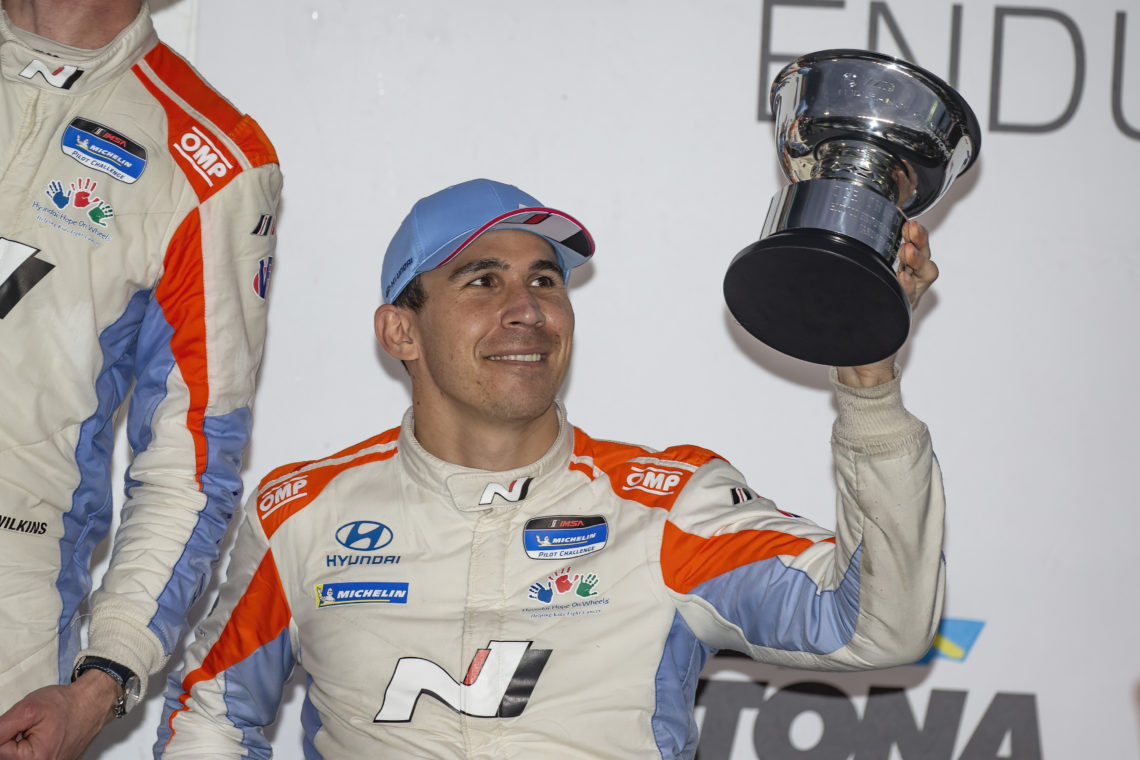


It has been nearly seven years since Robert Wickens suffered a life-changing accident at Pocono during the ABC Supply 500.
A collision that saw him launched into the catch-fencing, left him paralysed and facing the prospect of death at one stage.
The Canadian pulled through, however, and has since made a miraculous recovery to return to racing with Hyundai in the Michelin Pilot Challenge.
He even managed to claim the championship last season, as he reached the top step of the podium for the first time since his racing return.
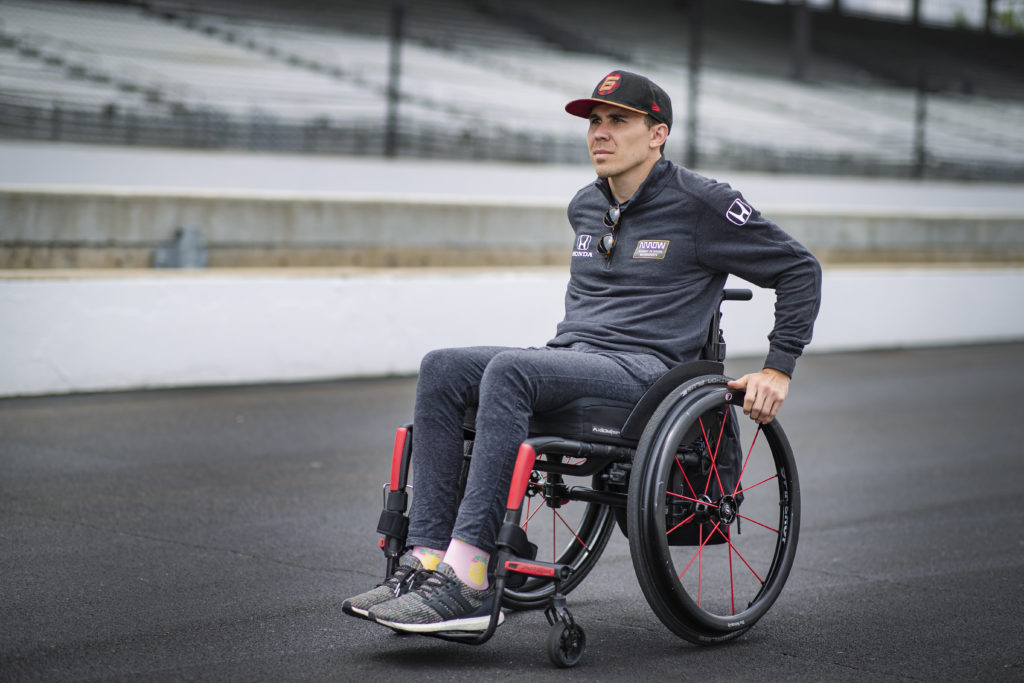
Robert Wickens would ‘love’ to return to the Indy 500
Wickens has thanked Bosch for their work in partnership with him to come up with a system that can be adapted to work on a wide variety of racing cars.
The 35-year-old even believes that it could work on an IndyCar, and told David Land that he still awaits an opportunity to return to the series to complete the Indy 500.
READ MORE: Two-time Indy 500 winner admits his racing career started on a ‘quarter-mile dirt track’
“The beauty of it, is it’s adaptable from car to car,” said Wickens. “I can take this with me to the IMSA WeatherTech Series, a GT3 car, an LMP2 car, and a GTP car, it works on all of them.
“With obviously adaptations to fit the needs of that car. It’s compact enough that it’ll even fit in any IndyCar.
“I’ve been very vocal that one day, I’d love to do an Indy 500 and do something that has never been done and I think doing it at a race like that would be amazing,” he continued.
“Bosch are onboard and they took everything into account when we were coming up with the concept.”
Wickens aims to pioneer racing for the physically unable
Wickens’ work is truly remarkable in the context of developing technology that should have been around for a while now.
Casting an eye back to Alex Zanardi’s horrific accident, where he lost his legs in a Champ Car crash, he went on to enjoy a great racing career afterward and even tested a Formula 1 car.
If the technology was around to do that nearly 20 years ago, motorsport as a whole should be at a stage where a better version of that can be placed on the likes of an IndyCar.
READ MORE: Marcus Armstrong shares the two-word phrase that was banned during IndyCar driver meals
With minimal braking required during the Indy 500, it would be the perfect sort of event for Wickens to make a comeback at.
After taking the time to design a great new system with Bosch, there’s every possibility that a team decides to come calling for his services in the future.