

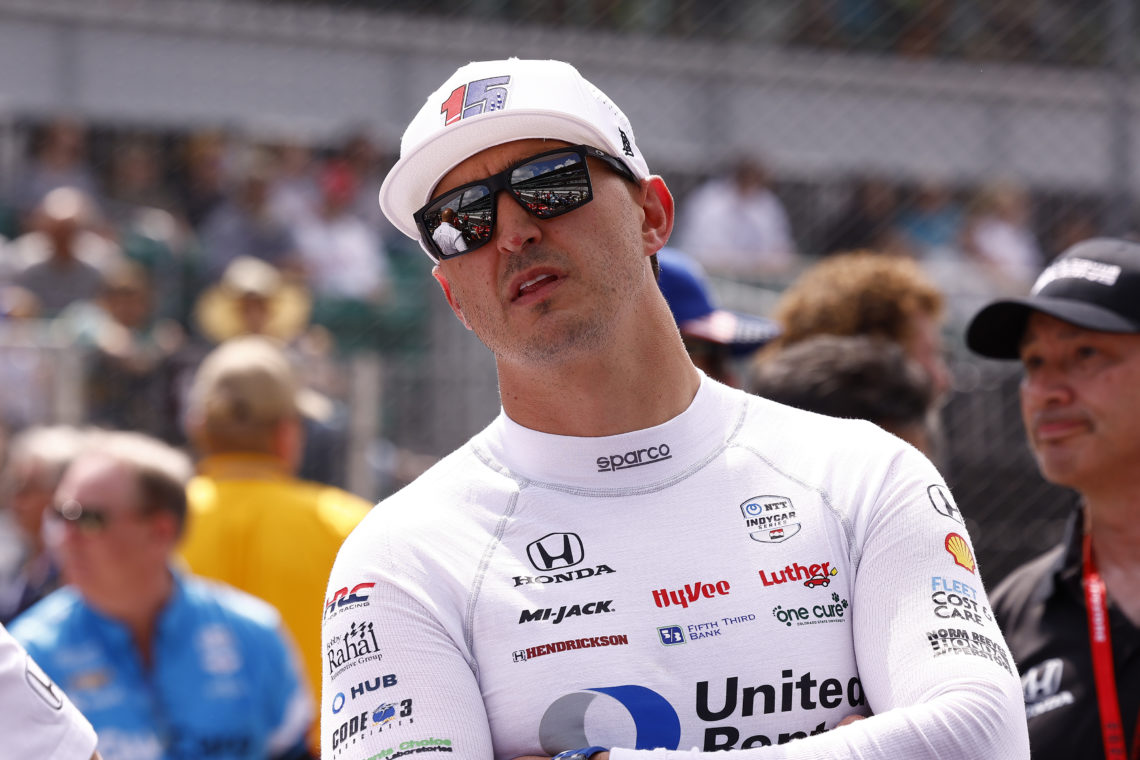


Graham Rahal has shed light on why IndyCar events on short ovals struggle to create overtaking and why races often turn into single-file precessions.
IndyCar introduced the hybrid unit in the middle of the season at Mid-Ohio, adding an extra dimension to the cars and a sizeable amount of weight.
The two oval races on the short oval at Iowa during the doubleheader weekend were lacklustre spectacles as the high line was difficult to use.
A range of drivers up and down the grid have spoken on the difficulty they are experiencing when trying to make overtakes on ovals. This includes Scott Dixon, who suggested IndyCar lowers the turbo boost ahead of the race at World Wide Technology Raceway.
Graham Rahal thinks hybrid engines make it hard for IndyCars to overtake on short ovals
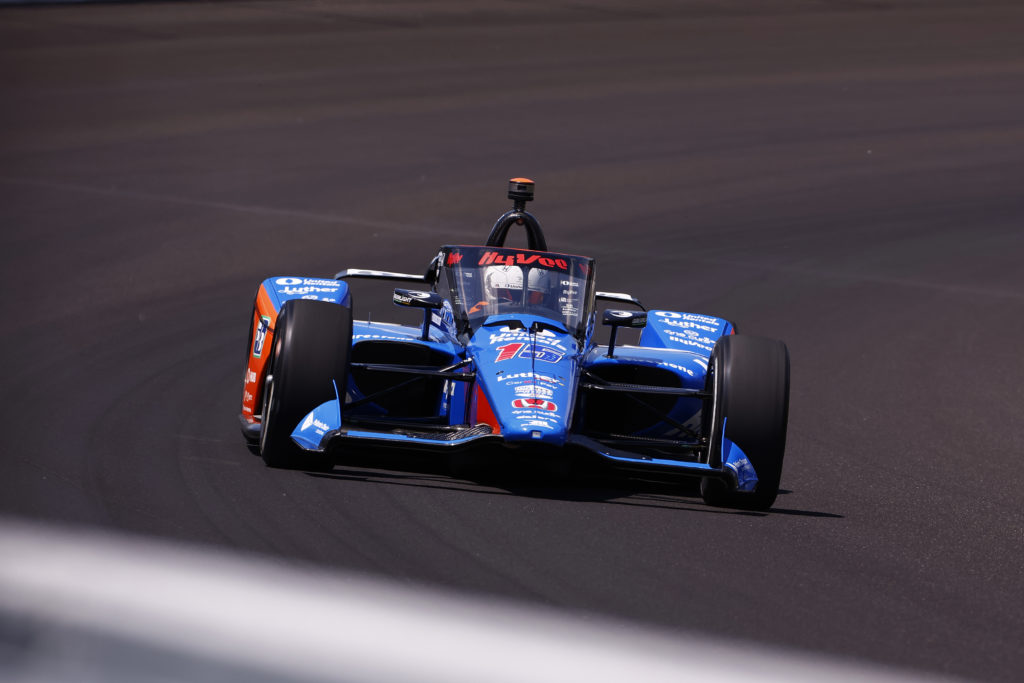
The two races at Iowa had a very specific groove near the apron of the circuit which had much more grip than the high line.
This forced drivers to drive lower down the track, making overtaking difficult as they couldn’t get alongside their rivals.
The situation will likely be similar at Gateway over the race distance, with the circuit a length similar to the short oval in Iowa.
READ MORE: Every IndyCar Series team’s confirmed driver line-up for the 2025 season
Qualifying was a struggle for Rahal at WWTR as he set the 16th-fastest two-lap average on the oval for Rahal Letterman Lanigan Racing.
After qualifying, the American told David Land that he didn’t anticipate the 260-lap race being full of overtakes.
He said: “I wouldn’t get your hopes up. But as I urge all of you to be positive, the thing that we’re in the midst of, and unfortunately, this isn’t like a lot of other sports and things that they can practise behind closed doors.
“Everything that you see, everything we’re experiencing, you guys see it and are living it with us. Unfortunately, you’re talking about a car that has a lot more mass. You’re talking about a car that’s got a different engine unit with the hybrid. That can’t be understated.”
The all-new hybrid system was initially planned to be introduced at the start of the 2024 season but was delayed and brought in for the event at Mid-Ohio.
Hybrid is still very new to IndyCar and has only been used for three events ahead of the weekend at Gateway.
The lack of braking on an oval also adds an extra layer of difficulty when recharging the hybrid system. This leaves the electrical power of minimal benefit on ovals while the extra weight affects the car’s balance.
Rahal explained that the hybrid is much more effective on permanent road courses with much heavier, more frequent braking zones.
He added: “The hybrid, the way that it works, it pulls away power from the engine, but it adds it back to the electrification. But on a track like this, you don’t get as much of the bump from the electrification as maybe a really slow corner at a road course.”
Graham Rahal is expecting lacklustre ovals races in 2024 and hopes for future improvement
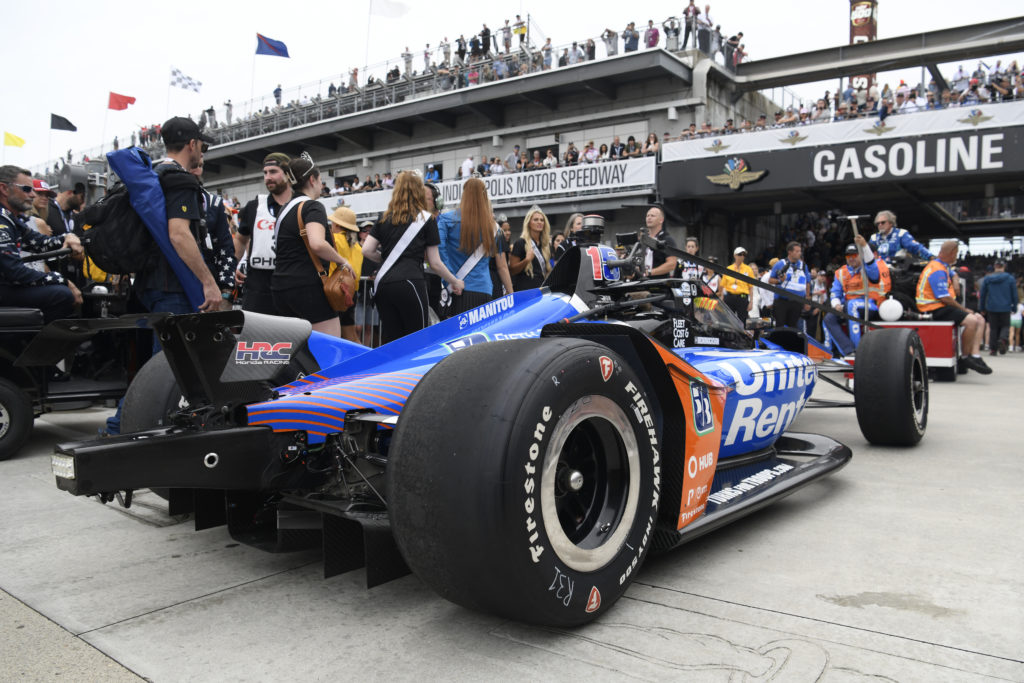
IndyCar has had three races on ovals this season, and the only event on a superspeedway, the Indy 500, saw plenty of overtakes before hybrid was introduced.
The aero package worked perfectly to promote overtaking, and there were two passes for the lead on the last lap in massive contrast to racing on short ovals.
Rahal acknowledged that the relatively dull racing in IndyCar on ovals is a frustrating experience but is hopeful the championship can improve in this aspect.
He said: “For Firestone, there’s a lot of things to go through that can’t be understated. I know everybody’s frustrated with what they’re seeing right now.
“My hopes are with time, we’re going to get there. The downside of this is you’re going to get this show [at] four out of the next five races, and that’s a bummer. But, hopefully, magic can strike and it’ll be alright.”